
Zephyr Training
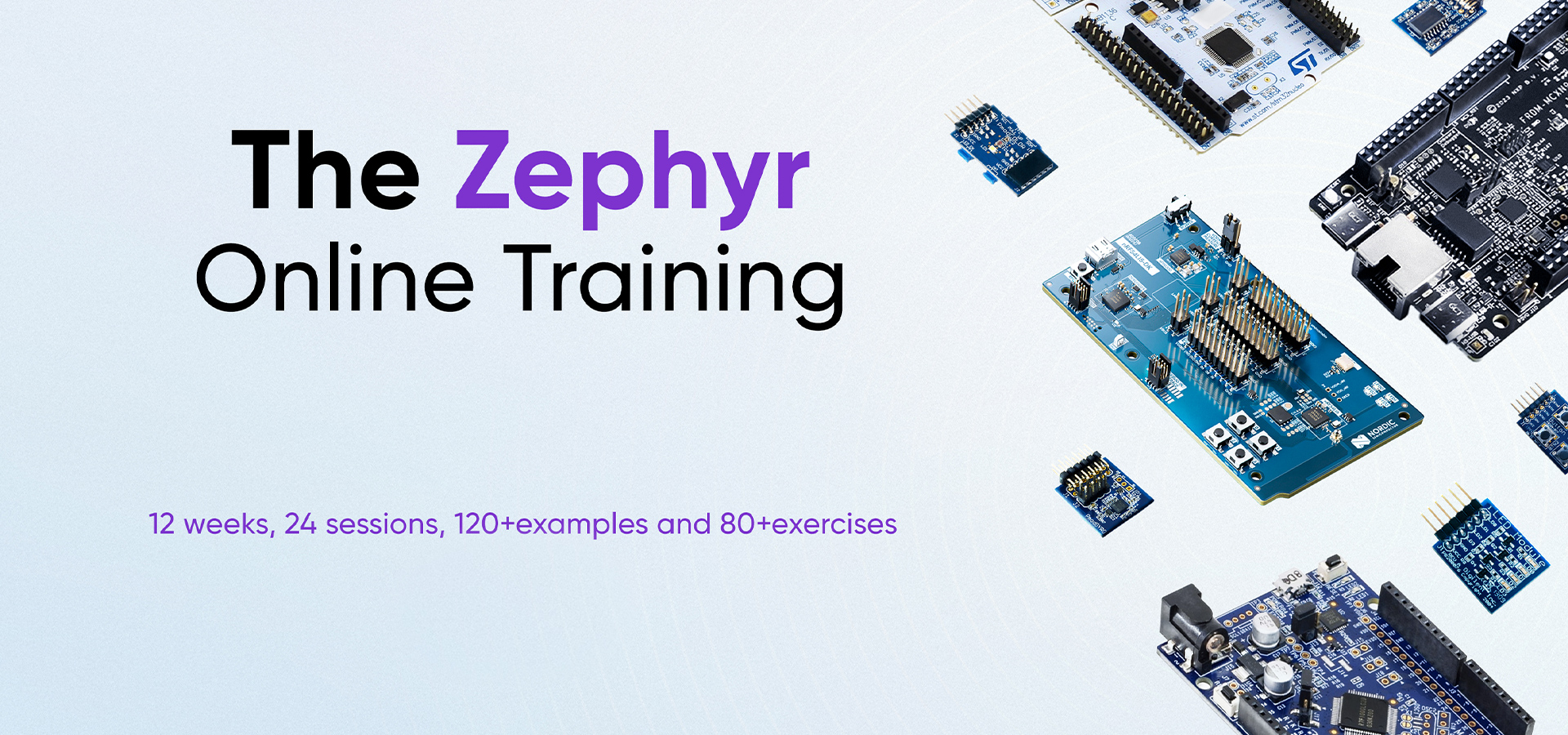
Advance your embedded career with this 12-week Zephyr Upskilling Training. Designed for engineers moving from bare-metal or other RTOS environments, the program delivers practical mastery of the Zephyr Project.
You will understand Zephyr’s architecture, configuration model (DeviceTree, Kconfig, CMake), peripheral drivers, kernel fundamentals, and modern communication frameworks like Zbus and RTIO. By the end, you will be able to develop drivers, define custom boards, and build robust real-time systems with confidence.
Week 1
Foundations, Environment, and First Hardware Interaction
- » Session 1: Introduction and Project Setup
- » Session 2: GPIOs and dt_spec
Week 2
Serial Communication and Interrupts
- » Session 3: UART
- » Session 4: Interrupts
Week 3
Console, Logging, and Build Fundamentals
- » Session 5: Console Logs
- » Session 6: Build and Configuration
Week 4
Kernel Fundamentals – Threads and Scheduling
- » Session 7: Threads
- » Session 8: Kernel
Week 5
Inter-Thread Communication and Synchronization
- » Session 9: Data Passing
- » Session 10: Thread Synchronization
Week 6
Deferred Execution and Advanced Communication
- » Session 11: Work Queues
- » Session 12: Zbus
Week 7
ADC and Sensor Interface
- » Session 13: ADC
- » Session 14: Sensors
Week 8
I2C and RTIO
- » Session 15: I2C
- » Session 16: RTIO
Week 9
SPI and the RTIO-Based Sensor Interface
- » Session 17: SPI
- » Session 18: Sensors – Part 2
Week 10
Device Drivers from Scratch
- » Session 19: Your First Driver
- » Session 20: Device Drivers (Sensor)
Week 11
Defining Your Own Board
- » Session 21: Board definition I
- » Session 22: Board Definition II
Week 12
Startup Sequence and Contributing
- » Session 23: Startup Sequence
- » Session 24: Contributing to Zephyr
For more information:
Zephyr Training Syllabus
Requirements
- Computer with Teams and Docker installed
- Previous experience with Cortex-M microcontrollers
- Experience working with GPIOs, UART, SPI, I²C, ADC, and interrupts
- Understanding of memory management
- C programming (structures, arrays, and pointers)
- Basic knowledge of CMake and debugging tools
- Operating system concepts (recommended)
Tools
- Any Cortex-M board supported officially by Zephyr (see F.A.Q. section)
- Agilent pmod boards: Pmod-Leds, Pmod-Btn, Pmod-Gyro, Pmod-Acl
- At least two potentiometers
- Docker, Docker Compose, DevContainers, VS Code
- On-board Segger J-Link, Ozone, and SystemView (optional)
Resources


of Completion
Tutor
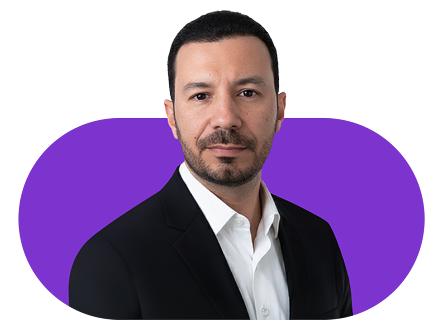
Diego Perez
Embedded software engineer with more than 18 years of experience developing complex real-time systems across multiple microcontroller architectures, serving industries such as automotive, IoT, appliances, and industrial automation.
Free
- Limited access to course content using Embedded House
- Access to our Docker Hub
Professional
- Full access to the course content
- Dev kit included
- Weekly group mentorship
- Verified Certification
- Badge and Certificate of Completion
Enterprise
- Full access to the course content
- Custom driver modules
- Dedicated support
F.A.Q.
Which development board will be used during the training?
Do I need the exact PMOD modules mentioned in the course?
Can I use Arduino shields or MikroBUS Click boards?
Do I have to complete all the exercises?
What materials will I receive during the training?
Which boards are officially supported in the course examples?
When will the live sessions with the instructor take place?
Get in touch
Edwin Bolón
Ready to master Zephyr? Reach out today to get your questions answered directly by one of our engineers.